
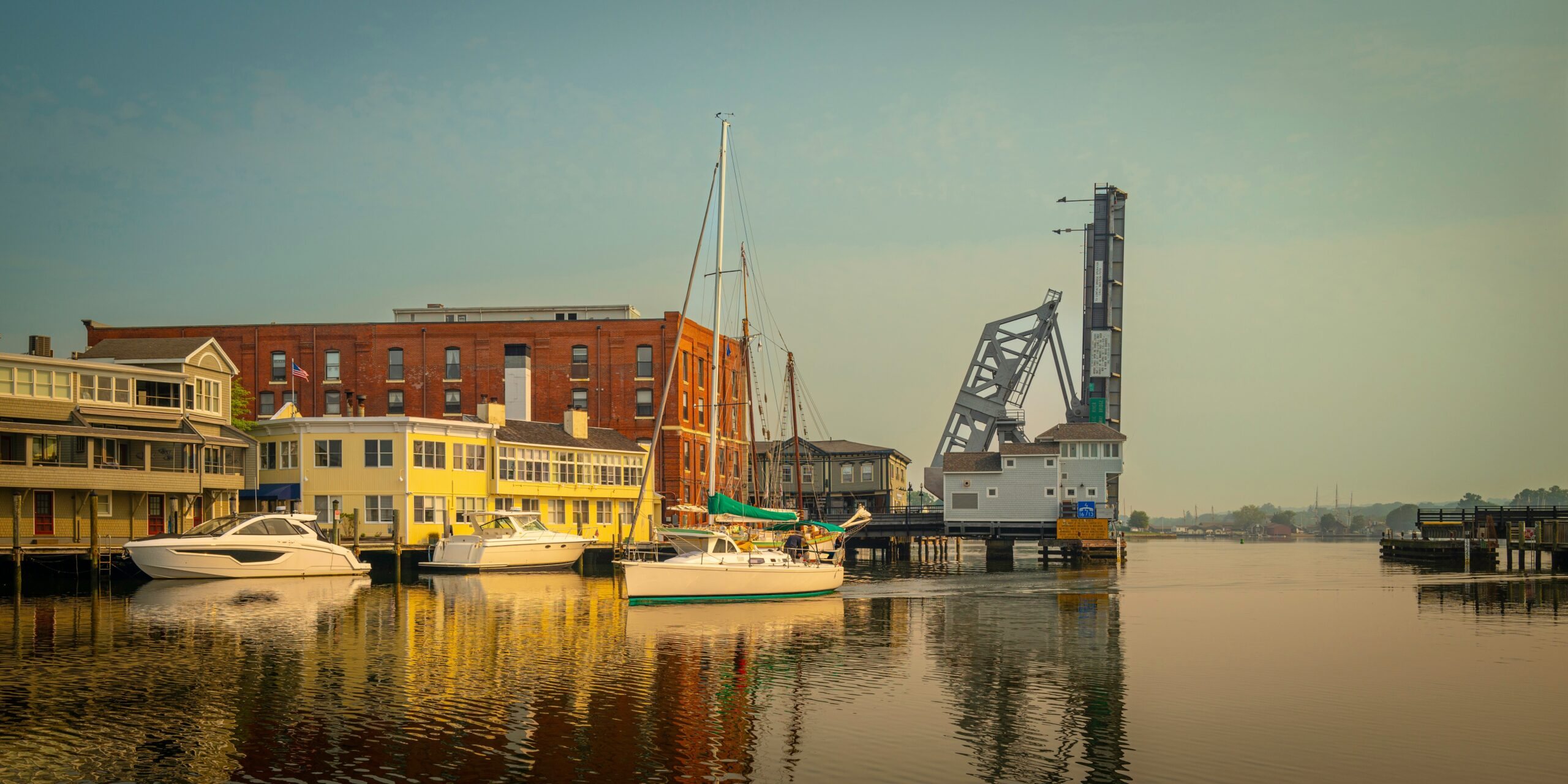
Mystic is not a town. It is a village split down the middle by the Mystic River, the west bank in Groton and the east bank in Stonington, and it has no government of its own. For a tenant or an owner that is the first thing to understand, because your zoning, your permitting, your building official and your mill rate all depend on which side of the bridge your door is on.
I am a licensed real estate salesperson with Switz Real Estate Associates Inc., and I represent landlords and tenants across Mystic and the wider New London and Middlesex County markets. Below is current availability, followed by what a tenant, landlord, or investor should understand about this market.
Available Space in Mystic
Current listings are on the properties page, and not everything I am working on is posted there. Mystic space turns over quietly, and downtown storefronts in particular tend to move through conversation rather than a sign in the window.
If you have a Mystic requirement, call or text me at (860) 400-9476. I would rather hear it early than compete for it late.
The Mystic Commercial Market
Two towns, one village, and it shows up in your lease. The Groton side and the Stonington side run separate land use commissions, separate building departments and separate tax rolls. Two storefronts four hundred feet apart can sit under different zoning regulations and carry different mill rates. Before you sign anything in Mystic, confirm which town you are actually in. That single question changes deals.
The bridge sets the rhythm of Route 1. The Mystic River Bascule Bridge was built in 1922 to a design by Thomas Ellis Brown, formerly chief engineer at Otis Elevator, and it still carries U.S. Route 1 through the center of the village. From May 1 through October 31 it opens hourly at forty minutes past the hour and on demand, roughly 2,200 openings a year at about five minutes each. Route 1 stops when it lifts. For a retailer that is not a nuisance detail. It is the reason the two banks behave like separate trade areas in season, and it is worth deciding deliberately which side you want to be on.
Seasonality is the underwriting question. Mystic Seaport Museum and Mystic Aquarium pull visitors into a village of roughly 4,350 residents across three and a half square miles of land. A concept underwritten on July and August will struggle in February. A concept underwritten on February leaves money on the table. Ask any landlord quoting you a rent how the comparable tenant performed in the first quarter. If nobody can answer that, treat the number as an opening position rather than a market rate.
Downtown and the interchange are separate markets. West Main and East Main carry the walkable storefront inventory: small footprints, older buildings, tight parking, heavy foot traffic in season. The Route 27 corridor at Interstate 95 Exit 90 is a different product entirely, with Olde Mistick Village, the Aquarium, hotel and highway-oriented retail, larger floorplates and dedicated parking. Rents, tenant mix and the seasonal curve all differ between them. A quote that sounds high or low usually reflects which of the two you are in.
Small footprints and parking are the constraints. Downtown building stock is nineteenth and early twentieth century. Floorplates are small, layouts are irregular, and modern kitchen ventilation, accessibility and HVAC frequently cost more to fit than the space rents for. Parking is the other recurring problem. If your concept needs a large contiguous footprint with its own lot, you are looking at the Route 27 corridor, not the village.
It is a Northeast Corridor stop. Amtrak serves the Mystic station and SEAT runs local bus service. In a market this size that matters more for staffing than for customers, and in a hospitality economy with a thin labor pool it is worth more than it looks.
Property Types I Handle in Mystic
Retail and restaurant space on both sides of the river. Office and medical office. Hospitality and mixed-use buildings. Investment sales. Land.
Landlord and Tenant Representation
For landlords. Pricing, positioning, and exposure on the platforms commercial tenants actually search, plus direct canvassing of the tenant types most likely to fit the space. In a seasonal market, a concept that survives the winter matters as much as the rent number a tenant will agree to in June.
For tenants. Site selection across Mystic, Stonington, Groton, New London and the wider New London and Middlesex County markets, then negotiation of economics, operating expense exposure, and lease terms. Tenant representation costs the tenant nothing in most transactions, since the fee is paid from the listing side.
Common Questions
What does commercial space cost in Mystic?
Rent in Mystic is a wide band, and a single number would mislead you. Downtown storefront, highway-oriented retail at Exit 90, and second-floor office in the village are three different products at three different rents, and the Groton and Stonington sides carry different tax loads on top of that. Tell me the use and the footprint and I will give you a real range with the comparables behind it, rather than a number that sounds authoritative and is wrong for your requirement.
Which side of the river should I be on?
It depends on whether your customer is walking or driving. Downtown works for a concept that converts foot traffic and can operate out of a small, older space. The Route 27 corridor works for a concept that needs parking, signage and a highway count. The jurisdictional difference is the part people miss: the same use can face a different approval path in Groton than in Stonington, and that timeline is worth money.
Is Mystic a good market for a first location?
It is a demanding one. Rents reflect the visitor economy, the season is short, and winter operating discipline separates the tenants who renew from the ones who do not. If your concept has been proven somewhere with a flatter demand curve, Mystic can be very good. If this is the first location and the business plan assumes summer volume twelve months a year, build a more conservative model before you sign.
Do I need my own representation as a tenant?
In most transactions it costs you nothing, because the fee is paid from the listing side. The listing agent works for the landlord. Having someone reading the lease, the operating expense exposure and the comparables on your side of the table is worth having, particularly in a market where two sides of one street sit in different towns.
If your requirement is industrial or flex rather than storefront, Mystic will not have it. The nearest consistent availability is Eastport North in Old Lyme, directly off I-95 Exit 70, and New London carries the marine and service inventory near the harbor.
Contact
FOR MORE INFORMATION CONTACT:
Gregory Beebe
Member Associate, Society of Industrial and Office Realtors®
(860) 400-9476 | [email protected]
LICENSED BROKER:
Switz Real Estate Associates Inc.
CT Broker License # REB.0757584